Designing a Scalable AI-Enabled Education Marketplace
Overview
Role: Lead Product Designer (UI/UX)
Scope: Marketplace · Mobile App · SaaS CRM · Design System · AI UX
Company: The Sapience LLC
Sapience One is an end-to-end education services platform designed to connect parents and learners with verified tutors, coaches, and specialists, while also enabling tutors and internal teams to manage sessions, performance, and operations at scale.
The Challenge
The education services space suffers from fragmented experiences. Parents struggle to discover and trust tutors, tutors face complex onboarding, and admin teams rely on manual workflows. Existing platforms lack personalization and scalability.
Problem Statement: How might we design a multi-sided system where every role (Parent, Tutor, Admin) has a different mental model, yet the experience remains consistent and intuitive?
Users & Research
We identified three primary user groups with distinct needs:
- Parents/Learners: Want trust, clarity, and ease. Low tolerance for friction.
- Tutors: Want visibility and predictable income. Frequent app usage.
- Admins: Power users needing high-frequency actions and zero errors.
Design Strategy
My strategy focused on Clarity over Completeness and Trust-first UX. We used progressive disclosure to handle complexity and ensured AI was always "Human-in-the-loop".
Marketplace Experience
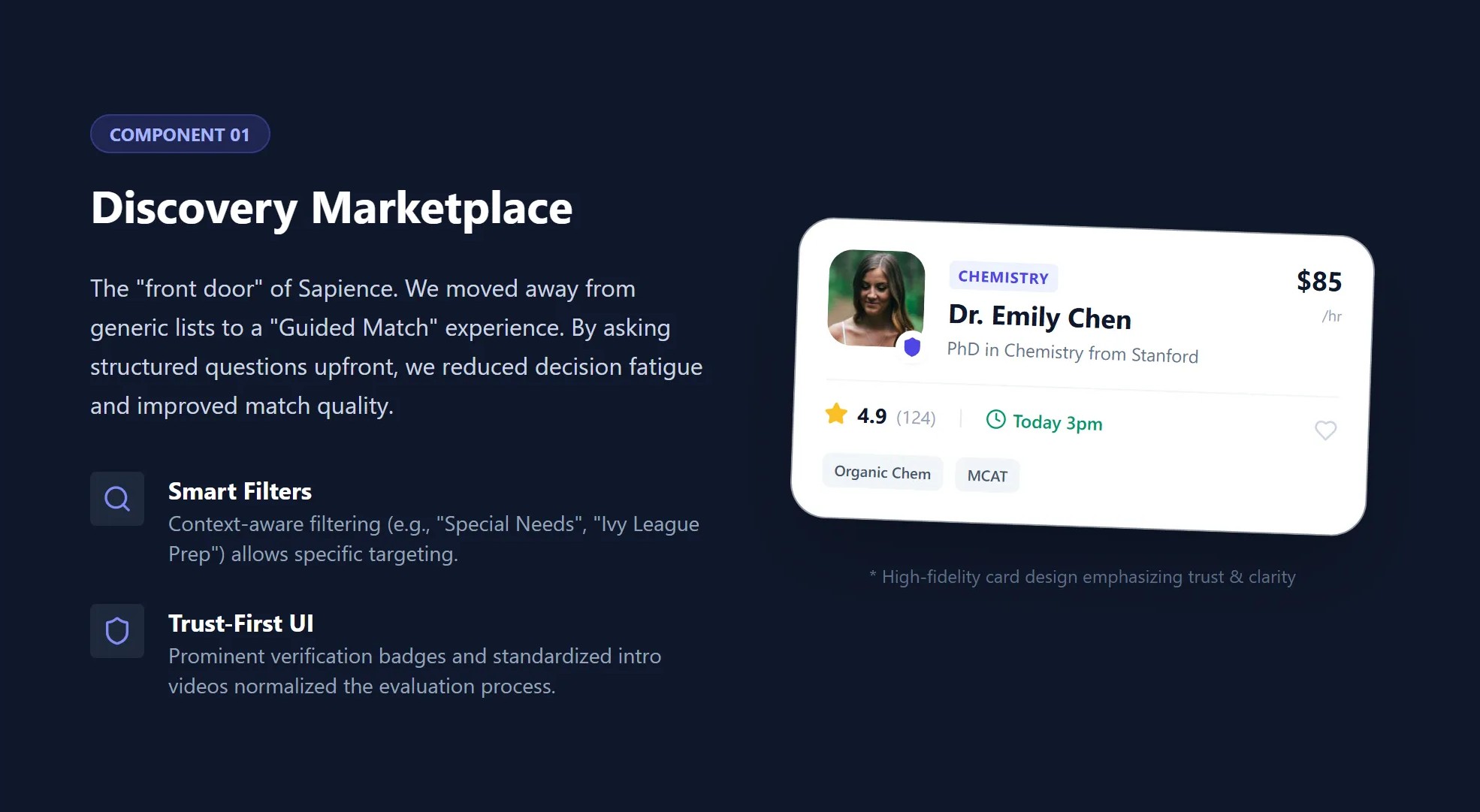
To solve the discovery challenge, we designed modular tutor cards with strong visual hierarchy emphasizing expertise and reviews. Filters were designed with progressive disclosure to avoid overwhelming parents.
Sapience One App
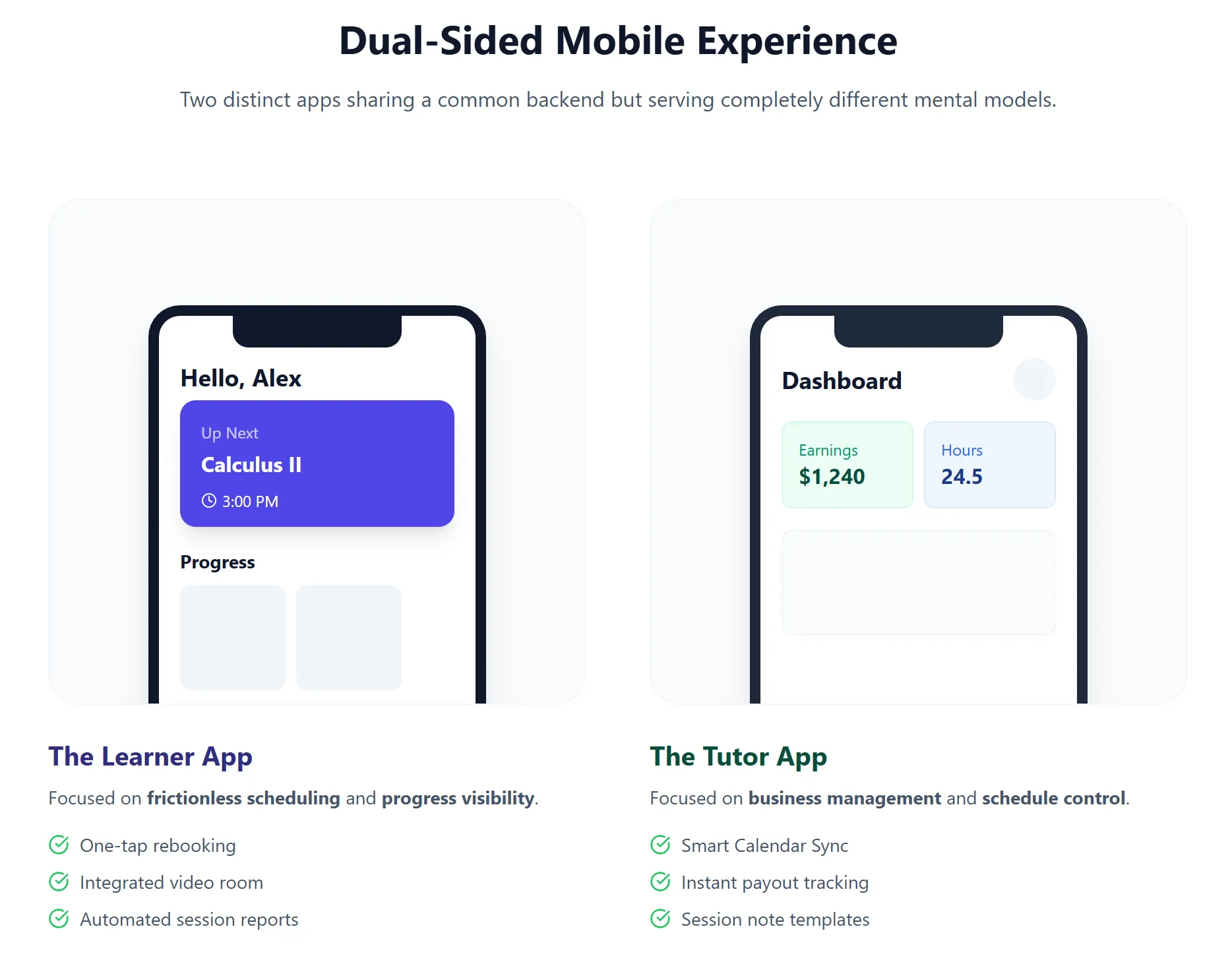
For the learner/parent app, we focused on minimizing cognitive load. We used calendar-based mental models for scheduling and clear micro-interactions to reinforce critical actions like booking and payments.
.webp)
.webp)
Tutor & Admin Experience
Tutor App: Simplified onboarding with clear progress indicators and a dashboard focused on earnings and upcoming sessions.
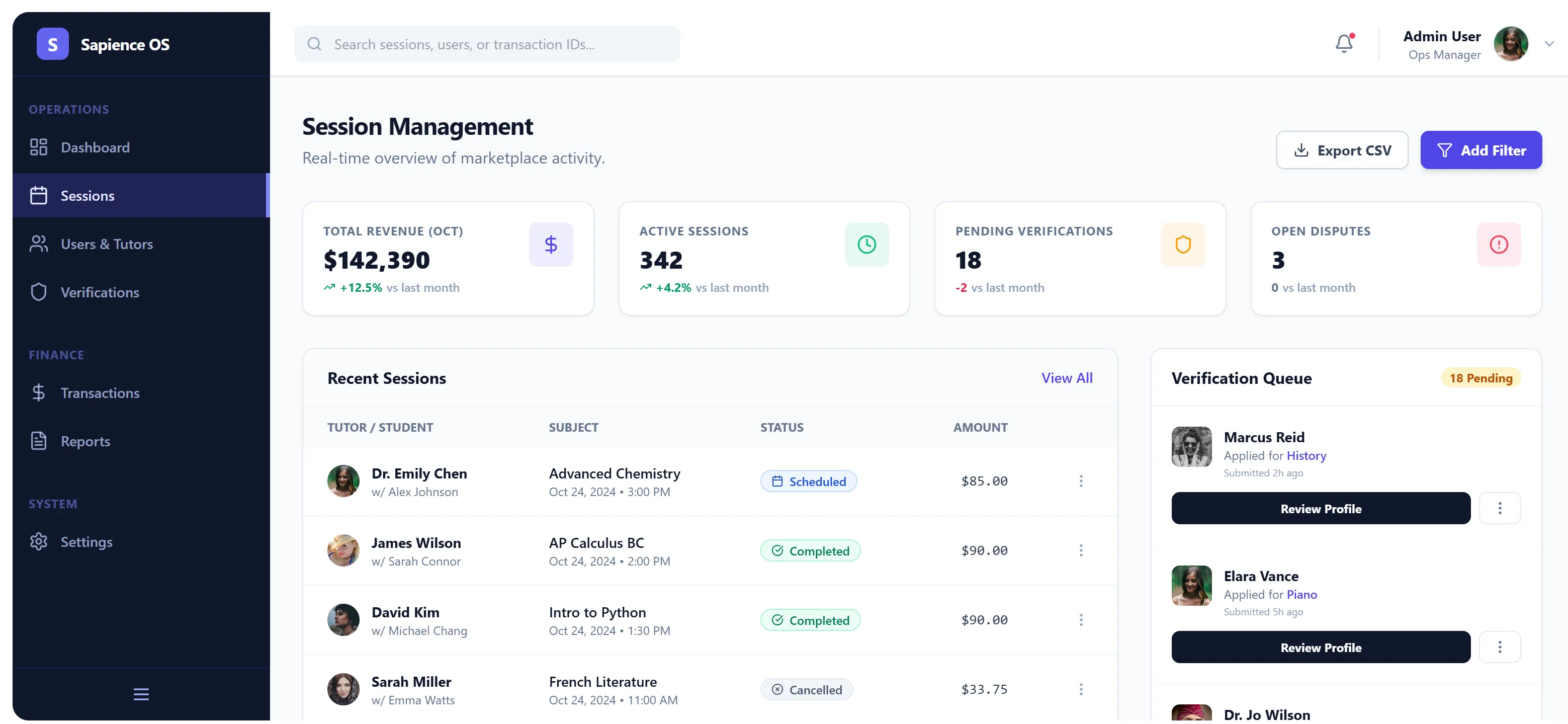
CRM & Admin Dashboard: We reduced context switching by introducing role-based dashboards and using data visualization instead of raw tables for monitoring platform health.
AI-Driven UX
We used AI to assist decision-making, not replace it. Principles included explainability and confidence indicators.
- Personalized Suggestions: Tutor recommendations come with explanations (e.g., "Matches your schedule").
- Admin Insights: AI flags potential issues but leaves the final resolution to the human admin.
Session Recaps
To enhance the learning experience and provide valuable insights for both parents and tutors, we designed a comprehensive session recap feature. This includes key takeaways, progress tracking, and actionable next steps, fostering continuous improvement and transparency.
.webp)
.webp)
Impact
- ~35% increase in overall engagement.
- ~40% improvement in onboarding activation.
- Reduced support tickets and faster development iterations thanks to the new Design System.